
Getting hurt in a defective airbag car accident can feel unreal. One second, you expect your airbag to save you. Next, you’re dealing with a safety system that didn’t show up when it mattered most.
Drivers across Alabama encounter this issue more frequently than they realize. Faulty inflators and sensor failures have caused widespread national recalls, and numerous affected vehicles remain on the road today. To understand your options after a crash in Alabama, contact a motor vehicle accident lawyer near you.
Airbag Recall Alabama: Key Takeaways
- Faulty inflators, sensor errors, and repair mistakes are common causes of airbag failures in Alabama crashes.
- Save the vehicle and document everything so engineers can analyze the airbag system accurately.
- Talk to an Alabama injury lawyer who can review recalls, investigate the failure, and protect your claim.
Why Airbags Sometimes Fail
Airbags are supposed to deploy within milliseconds and protect you from the worst forces in a crash. When they don’t, something inside the system went wrong. NHTSA reports that millions of vehicles have been recalled due to inflator defects that may cause airbags to explode or fail to deploy.
Heat, humidity, and aging components can damage inflators. Wiring issues or faulty crash sensors can interrupt the airbag’s deployment signal. Even a small installation mistake after a previous repair can cause a complete system failure.
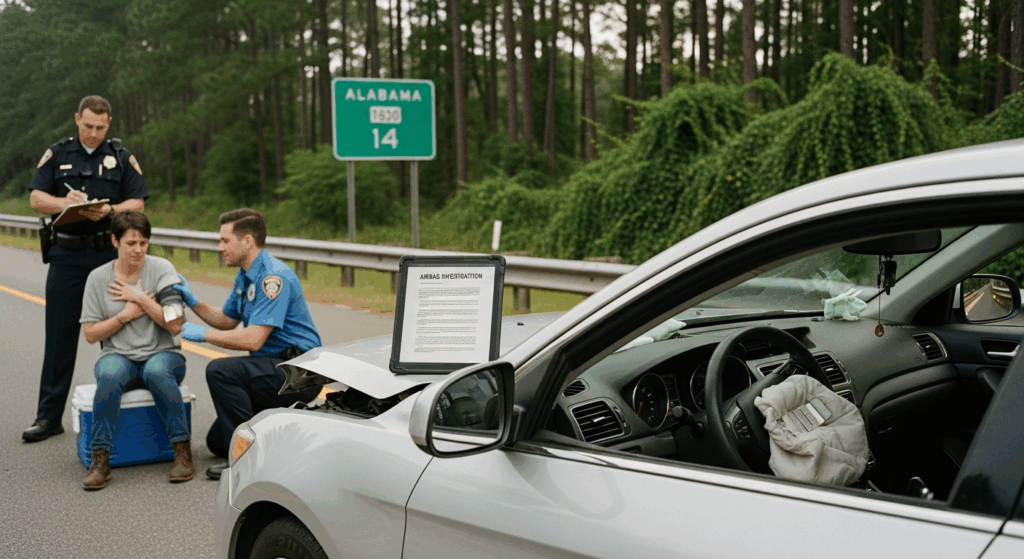
What Goes Wrong at the Factory vs During Repairs
Manufacturing defects happen long before you buy the car. Consumer Reports explains that some recalled inflators used ammonium nitrate, a chemical that becomes unstable in heat and humidity. When it breaks down, the inflator can burst or fail.
Installation faults occur when repairs are done incorrectly. A technician might miswire a sensor or fail to calibrate the crash detection system. This can prevent the airbag from triggering when it should. Identifying the cause of the failure helps determine who may be responsible.
How a Product Liability Claim Works in Alabama
Alabama law allows injured drivers to seek compensation if a defective product caused their injuries. FindLaw notes that claims may involve design defects, manufacturing defects, or failure to warn.
To build a strong case, you must show that the airbag system was defective and that the defect contributed to your injuries. Liability may fall on the vehicle manufacturer, the airbag manufacturer, or a repair facility that previously serviced the system.
How You Can Show an Airbag Was Defective
Proving an airbag defect requires quick action and substantial evidence. Keeping the vehicle intact allows experts to inspect the components and identify what went wrong.
Investigators often review data from the Event Data Recorder. Under US Code of Federal Regulations Title 49 CFR Part 563, EDRs capture details such as pre-crash speed, braking, seat belt use, and airbag deployment. This information helps determine whether the system tried to deploy the airbag.
Engineers may also examine the inflator, the crash sensors, and the wiring. If the vehicle was part of an active NHTSA recall, that documentation can strengthen your claim.
Additional Helpful Topics for Alabama Drivers
What You Should Do Right After an Airbag Fails
Move to a safe place and call 911. Take clear photos of the interior, especially the airbag area. Seek medical care right away since some injuries may not appear immediately. Check for active recalls by using NHTSA’s VIN lookup (Vehicle Identification Number lookup).
Injuries You Might See When an Airbag Malfunctions
Airbag failures can lead to severe trauma. These may include broken facial bones, chest injuries, burns, or head trauma. Some recalled inflators have even ruptured, sending metal fragments into the vehicle. These injuries often require long-term treatment.
How Alabama’s Negligence Rule Affects Your Case
Alabama’s contributory negligence rule means that even slight fault on the driver’s part can affect compensation. Because airbag defect cases rely heavily on technical evidence, working with an injury lawyer helps protect your rights.
Your Next Step
If your airbag failed in a crash, you do not have to figure everything out alone. Contact CWA law firm today for guidance and a clear plan moving forward.
Manufacturer Defect Car Injury: Bottom Line
A manufacturer defect car injury situation can leave you with medical bills, stress, and uncertainty. When an airbag fails to protect you, the law allows you to seek compensation. Checking recalls, preserving the vehicle, and speaking with an Alabama personal injury lawyer can help you move forward with confidence.
Defective Airbags Car Accident Alabama: FAQ
If you were in a car accident involving a defective airbag in Alabama, these frequently asked questions may help you understand what comes next.
- Why would airbags fail during a crash?
Airbags may fail due to issues with inflators, sensors, wiring, or incorrect installation. Heat and humidity can also degrade the chemicals in the inflator over time. These problems can prevent the airbag from deploying or cause it to deploy incorrectly. - How do I know if my vehicle is part of an airbag recall in Alabama?
You can enter your VIN on NHTSA’s recall site to check for active recalls. If your vehicle is affected, schedule repairs immediately. This also helps support your case if the airbag failed during a crash. - Can I sue the airbag manufacturer if mine did not deploy?
You may be able to file a product liability claim. Engineers and attorneys review the inflator, sensors, wiring, and crash data to determine whether a defect caused the failure. - What evidence will my lawyer need in an airbag failure case?
Your lawyer may use Event Data Recorder information, expert inspections, photos, and medical records. Recall documentation from NHTSA can also strengthen your claim. - How long do I have to file an airbag-related injury claim in Alabama?
Most injury claims must be filed within two years, although there may be exceptions. Speaking with a lawyer helps you understand the deadline for your situation.
About Our Firm
We help clients across Alabama with complex vehicle defect cases and serious injury claims. Our team is committed to protecting injured drivers and holding manufacturers accountable. To learn more about our law firm, visit our About Us page.